

Top 10 Duas Every Muslim Should Know
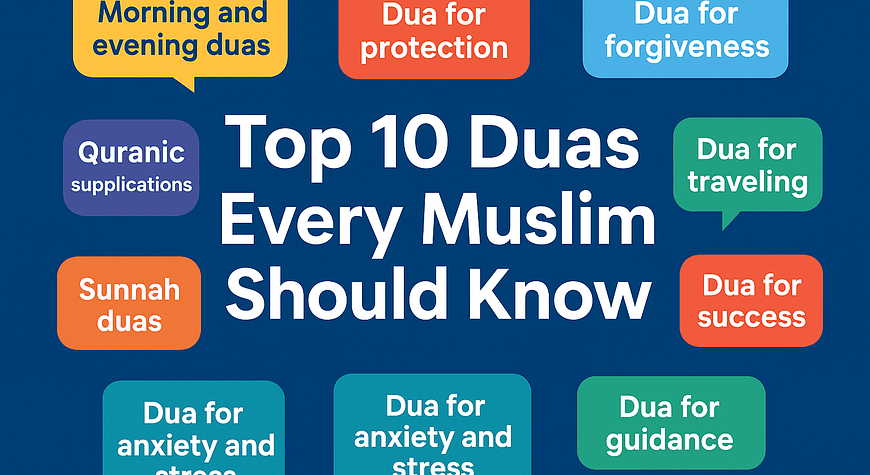
Duas represents an individual conversing with Allah directly from the heart. Muslims seek His guidance, protection, and comfort. No matter the situation, whether stressful, fearful, happy, or anywhere in between, sincerely turning to Allah strengthens one’s faith and fills the heart with inner peace. Let spiritual oxygen flow through, it is critical in helping the heart in this life. The Top Ten Duas Every Muslim Should Know, and including others such as, dua to Allah for protection, dua for forgiveness, dua to Allah before sleeping, travel dua, anxiety dua and stress dua, successful dua and guided dua, first and last duas or Quranic supplications, shall be detailed and explained in this article.
Recognizing the Value of Dua
Of all the ways we can worship Allah, Dua is the form of worship, unique and special, that touches Allah’s heart the most. Dua is more than just requesting something we want. Dua embodies a unique form of worship that conveys a heartfelt dependence, trust, and love of Allah. By making Dua, we acknowledge that we are not capable of handling all the spheres of life and that we are not in total control of our life, and that acknowledgment is humility, a strong form of worship.
That is, in fact, the strong, protective nature of the weapon of Dua. It is a sword that can defend the soul against all tribulations and can provide utmost comfort and remind one of the fact that all is possible only and only with Allah. Every small and big Dua is able to transform the nature of reality, and bless you with all that you desire and lose hope in.
Islamic Morning and Evening Supplications
Importance of These Times
The early morning and the quiet moments before the night are incredibly important spiritual times. Evening and morning supplications that help start and end the day are a way of being spiritually prepared for any challenges you may face during the day and being thankful for your daily blessings. These are the times which are best for reflection, protection, and asking Allah for mercy and guidance.
One of the best examples of a morning and evening supplication is
Bismillahilladhi la yadurru ma‘asmihi shay’un…”
Considered as an invisible shield that protects the reciter from all forms of harm for a day, this supplication is especially effective at building mindfulness, gratitude, and inner tranquility. With the help of this supplication and faith, a person is able to carry all of the daily tasks that are required of him or her.
Prayers for Protection
A Protection Safety Net
Every believer should feel a sense of protection from Allah. Life can be unpredictable. The act of reciting a prayer seeking protection can act as a spiritual protection from harm, accidents, and other dangers that may be lurking. Ultimately, peace of mind can be felt when relying on Allah as He is the ultimate protector.
Most Important Protection Dua
One of the best protection pratayers is Ayat-ul-Kursi, which must be recited after every prayer and should be recited before going to sleep. Spiritual protection and comfort is gained when this verse is recited, as a protective spiritual barrier is formed around you and your home. By incorporating protection prayer that may be dedicated to Allah and reflecting on His loving mercy, you will always be aware of His loving presence.
Supplications for Divine Pardon
The Importance of Asking for Divine Pardon
As human beings, we are prone to error, but in His kindness, Allah is endlessly forgiving. One’s soul is relieved, and spiritual equilibrium is regained through the asking of du’aas for forgiveness. Asking for forgiveness frequently keeps us in a humble state and near to Allah, protecting our hearts from spiritual stagnation, a condition that can result from lack of frequent spiritual reflection and sustenance.
The Greatest Form of Asking for Forgiveness
A relatively short and easily recitable du’aa for Allah’s forgiveness is:
astaghfirullahi wa atubu ilayh
or, ‘I turn to Allah in forgiveness and repentence, and seek His Pardon.’
reciting the supplication of istighfar, is one of the most well-known of Allah’s supplications, and for the intent of sincere istighfar, is referenced to as the Sayyidul Istighfar. One’s state of mind can be dramatically improved through the recitation of these du’aa as well as forgiveness for one’s sin.
Dua Before Sleeping
Ending the Day with Peace
Our vulnerability increases while sleeping, especially while we’re alone. However, reciting a dua before sleeping provides a sense of comfort, reminding us that our life, health, and our safety are all in Allah’s hands, and helps us let go of the worries of the day.
Beautiful Sleeping Supplication
Our beloved prophet (SAW) taught us to say,
“Allahumma bismika amutu wa ahya”
“O Allah, in Your name I die and live.”
Reciting Surah Ikhlas, Al-Falaq, and An-Nas before sleeping is also a beautiful and protective spiritual habit one should adopt to ensure safety and peace of mind.
Dua for Traveling
Protection on Journey
The unfamiliar cannot hurt us if we are careful. Dua for traveling brings peace and protection and reminds us to rely on Allah while traveling for work, pilgrimage, or leisure.
Traveling Supplication
As advised by the Prophet (SAW):
“Subhanalladhi sakhkhara lana hatha…’‘ – Allah is the one who makes the journey easy and we need to realize that. This dua helps travelers realize the need to remain mindful, patient, and grateful for Allah’s guidance and easy ways.
Supplications from the Quran
The Beauty of Quranic Duas
Supplications from the Quran strengthen one’s faith and encourage one to reflect more spiritually. Quranic supplications serve as eternal guidance from Allah. They are exquisite and inimitably composed in both language and meaning.
Most Important Quranic Duas
Patience: “Rabbish rah li sadri” means “My Lord, expand my chest with ease.”
Strength: “Rabbana afrigh ‘alayna sabran” means “O Allah, pour patience upon us.”
Mercy: “Rabbana la tu’akhidhna in nasina aw akhta’na”means “Do not punish us if we forget or make mistakes.”
The regular recitation of these duas aligns our hearts with the mercy and wisdom of Allah.
Sunnah Duas
Living the Prophetic Way
Sunnah duas reflect the practices of the Prophet Muhammad (SAW). They are simple, practical, and spiritually nourishing. Following these examples helps us live mindful, purposeful lives, infused with gratitude and worship.
Examples of Sunnah Duas
- Before eating: Reminds us to be grateful for provisions.
- After wudu: Strengthens spiritual purification.
- When leaving the house:
“Bismillah, tawakkaltu ‘alallah…” Placing trust in Allah before stepping into the world.
These small daily habits elevate the ordinary moments of life into acts of devotion.
Dua for Anxiety and Stress
Calming the Heart
Life can be overwhelming, and Islam provides duas for anxiety and stress to calm the mind and heart. Such supplications remind believers that Allah is the ultimate support, even when circumstances feel out of control.
A Heart-Soothing Supplication
“Hasbunallahu wa ni‘mal wakeel” “Allah is sufficient for us, and He is the best disposer of affairs.”
This dua acts like a spiritual hug, comforting the heart and providing reassurance that you are not alone in facing challenges.
Dua for Success
Success in Deen and Dunya
True success encompasses spiritual growth, personal achievements, and well-being. Dua for success covers all aspects of life, ensuring that efforts align with Allah’s guidance and blessings.
A Powerful Dua for Success
“Rabbana aatina fid-dunya hasanah wa fil-akhirati hasanah wa qina azaban-nar” “O Allah, grant us good in this world, good in the Hereafter, and protect us from the punishment of the Fire.”
This supplication balances worldly goals with spiritual responsibilities, reminding us that success is holistic.
Dua for Guidance
Finding the Right Path
Guidance is a blessing we should seek every day. Dua for guidance ensures that our decisions, thoughts, and actions remain aligned with Allah’s wisdom and mercy.
Essential Guidance Supplication
“Allahumma inni as’aluka al-huda” Asking Allah for clarity, wisdom, and firmness upon the right path. Regularly seeking guidance nurtures a heart that resists misguidance and stays close to the truth.
How to Make Your Dua More Effective
Tips to Strengthen Your Connection
- Sincerity: Speak from your heart without distraction.
- Facing the Qiblah: Physically orienting yourself symbolizes focus.
- Praise and Salawat: Begin by praising Allah and sending blessings on the Prophet (SAW).
- Consistency: Repetition and patience increase the impact.
A focused, intentional dua strengthens faith and ensures that your heart is fully present when communicating with Allah.
Common Mistakes to Avoid in Dua
Avoid These Habits
- Rushing through prayers: Take your time to reflect.
- Asking for harm to others: Dua should be for good and righteous purposes.
- Losing hope: Not receiving an immediate response does not mean rejection.
Remember, Allah sometimes delays responses to protect you from harm or provide something better than requested.
The Importance of Consistency in Dua
Consistency in dua is more important than frequency. A small daily effort, like reciting morning and evening duas or a short Quranic supplication, nurtures a steady spiritual habit. Think of it as watering a plant: the steady drip ensures growth and strength over time.
Final Thoughts on Building a Dua Habit
Regular dua transforms ordinary life into a spiritual journey. It develops patience, reliance on Allah, and a peaceful heart. By incorporating morning and evening duas, dua for protection, dua for forgiveness, dua before sleeping, dua for traveling, Quranic supplications, Sunnah duas, dua for anxiety and stress, dua for success, and dua for guidance into daily life, you create a constant connection with the Divine that brings peace, guidance, and fulfillment.
FAQs
1. What is the best time to make dua?
The best times include early morning, late night (last third), between adhan and iqamah, after obligatory prayers, and on Fridays.
2. Can I make dua in my own language?
Yes. You can make dua in any language because Allah understands every word and every whisper of your heart.
3. Does dua really change destiny?
Dua is powerful. According to Hadith, dua can change destiny unless it is something already decreed.
4. How can I focus better while making dua?
Find a quiet space, reflect on your blessings, visualize standing before Allah, and make sincere, heartfelt requests.
5. What should I do if my dua is not answered immediately?
Be patient. Allah answers in three ways—immediately, later when the time is best, or by protecting you from harm. Your dua is never wasted.
Lorem Ipsum